
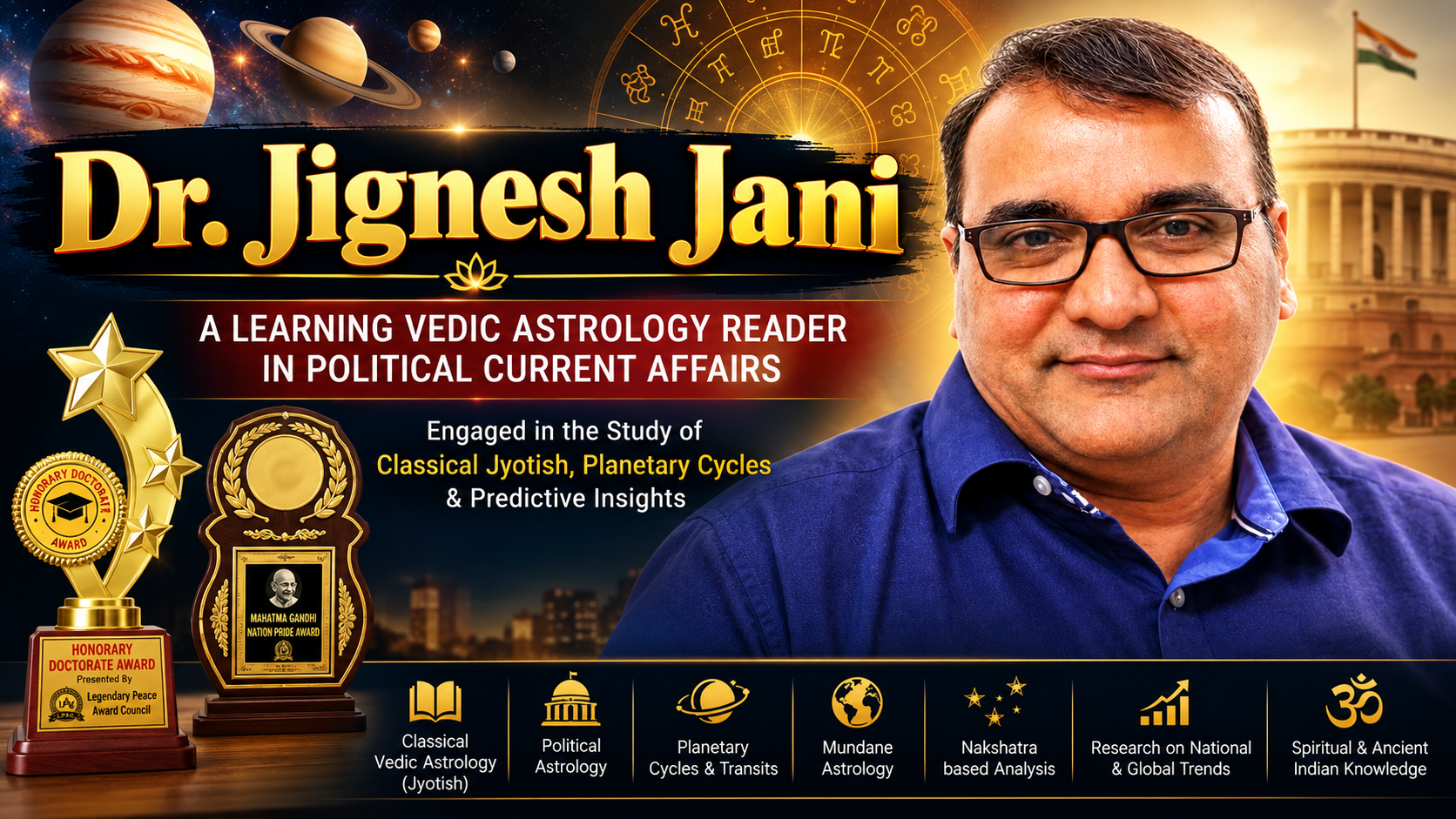
Astrologer Jignesh Jani Discusses Jupiter’s Symbolic Role in Promoting Peace
Ahmedabad | July 10, 2026: Vedic astrology researcher Jignesh Jani has shared his views on the symbolic significance of Jupiter in traditional Jyotish, describing the planet as an enduring representation of wisdom, ethics, justice, and diplomacy. According to Jani, many Vedic astrologers believe Jupiter’s symbolic influence becomes particularly meaningful during periods of international uncertainty, encouraging dialogue, responsible leadership, and peaceful cooperation among nations.
Jani explained that Vedic astrology has historically interpreted planetary movements as symbolic reflections of broader social and collective cycles rather than scientifically established predictions of future events. He noted that while current global developments have attracted significant public attention, astrology should be understood as a traditional philosophical framework that complements reflection rather than replaces evidence-based geopolitical analysis.
Discussing the present planetary landscape, Jani referred to the Mars–Rahu conjunction, or Angarak Yoga, which many astrologers associate with heightened energy, strategic competition, and increased geopolitical activity. He also mentioned the Saturn–Neptune alignment, often interpreted as representing institutional transformation, ideological evolution, and long-term structural changes across societies.
Against this backdrop, Jani highlighted Jupiter as a balancing influence within Vedic astrology. He explained that Jupiter traditionally symbolizes knowledge, moral values, education, justice, optimism, and diplomatic engagement. According to many practitioners, these qualities encourage nations to pursue negotiation, cooperation, and long-term stability instead of confrontation.
“Jupiter reminds us of the importance of wisdom and ethical leadership during challenging periods,” Jani said. “While astrology offers symbolic perspectives on collective cycles, lasting peace is achieved through dialogue, mutual respect, and thoughtful decision-making by governments and international institutions.”
Jani further emphasized that geopolitical outcomes cannot be attributed to planetary positions alone. Economic conditions, diplomatic initiatives, security considerations, public policy, and international cooperation all play decisive roles in shaping world events. He encouraged readers to distinguish traditional astrological beliefs from evidence-based geopolitical analysis.
Concluding his remarks, Jani expressed hope that world leaders will continue to prioritize diplomacy, international collaboration, and peaceful conflict resolution. He believes that responsible leadership, combined with mutual understanding and global cooperation, remains the strongest foundation for creating a stable, secure, and prosperous future for all nations.