
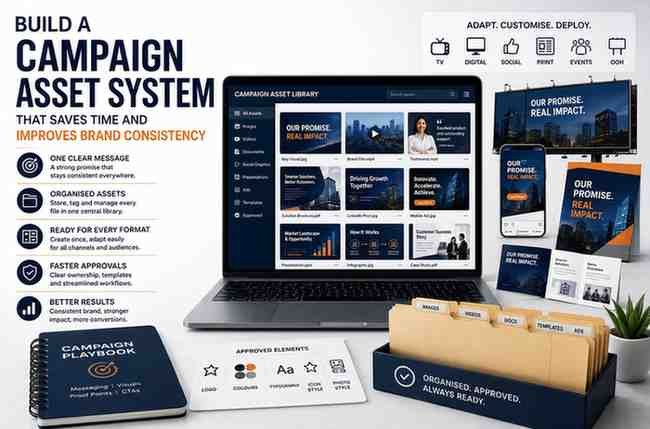
How to Build a Campaign Asset System That Saves Time and Improves Brand Consistency
Campaigns often lose momentum long before they reach an audience. Messaging changes between teams, design files sit in separate folders, video versions are created too late and regional adaptations feel disconnected from the original idea.
A campaign asset system solves this by creating one organised source for the message, visual direction, proof points, approved formats and calls to action. It helps marketing, sales, media and local teams work from the same foundation instead of recreating the campaign at every stage.
Begin With a Clear Message Architecture
Every campaign needs a core promise that can survive across headlines, videos, sales decks, landing pages and media placements. Strong copywriting and creative direction helps teams define that promise before production begins.
The same clarity should guide physical experiences. At exhibitions and trade shows, a well-planned exhibition stall design and build can carry the campaign message into visitor flow, product demonstrations, meeting areas and follow-up conversations. When the core idea is clear, every asset feels connected even when the format changes.
Build a Reusable Asset Library
A campaign should create more than one hero visual or ad film. Customer proof, product explanations, founder comments, still images and short social clips can all extend its useful life. Well-structured testimonial video editing can turn one customer conversation into a longer trust-building asset, shorter clips and conversion-focused versions for different channels.
For community organisations, a similar process ensures the message is adapted with care for specific audiences. Reviewing the needs of different NGO cause areas helps campaign teams avoid generic storytelling and create material that is relevant to donors, volunteers, partners and beneficiaries.
A useful asset system includes:
- One approved core message, visual direction and primary call to action.
- Reusable proof assets such as testimonials, demonstrations, photographs and expert insights.
- Clear file naming, approval ownership and formats for each distribution channel.
Design for Different Media Roles
The asset system should not force every channel to carry the same message in the same way. Authority-led formats may need a thoughtful perspective, while high-frequency formats may need concise recall. A knowledge-partnership format can support deeper category education, while L-band advertising can reinforce a campaign message during live content.
Digital placements require another layer of planning. ABP digital display advertising can use campaign visuals to maintain visibility, while motion graphics for brand communication can make complex ideas easier to absorb across presentations, ads and social media.
Localise Without Breaking the Campaign
Regional execution should adapt language, context and media choice without changing the brand’s central idea. A coordinated regional campaign package can connect television, print, digital and social activity under one plan.
For Hindi-speaking markets, cinema and out-of-home advertising can create physical-world visibility, while Marathi TV spots and placements help brands carry a locally relevant message into Maharashtra households.
For FMCG brands, the system must continue through the buying moment. A practical quick-commerce advertising strategy connects campaign visibility with product discovery, listing readiness and repeat purchase.
Make Every New Campaign Easier
Review which messages, visuals and formats deliver the strongest engagement, enquiries or sales support. Keep those assets organised and improve them over time. A campaign asset system does not make creativity repetitive; it gives creativity a stronger foundation to scale.