Satyabhama Majhi: The Language of Memory, Place and Visual Storytelling
Art often begins with a simple act: looking closely. A street, a landscape, a familiar face, a childhood memory, a journey through a village, or an ordinary activity at home can become the starting point for a much larger visual story. For Odisha-based contemporary artist Satyabhama Majhi, observation and memory are important ways of understanding the world and transforming everyday experiences into artistic expression.
Working across painting, sculpture, installation, photography, mixed media, public art, and community-based practice, Majhi has developed a visual language that brings together personal observation, cultural memory, landscape, and social experience. Her work demonstrates how contemporary art can tell stories without relying on a single narrative or medium.
Memory as a Source of Artistic Expression
Memory occupies an important place in Majhi’s artistic thinking. Everyday experiences that might initially appear ordinary can acquire significance when viewed through memory.
The people encountered in daily life, the environments in which communities live, familiar landscapes, local traditions, and changes taking place around them can all become material for artistic reflection.
For Majhi, memory is not simply a record of the past. It can also influence how the present is understood. A remembered landscape may change as development transforms it. A traditional practice may acquire new meaning when seen from a contemporary perspective. An everyday experience may reveal connections with larger questions of identity and belonging.
This relationship between past and present gives her work a strong narrative dimension.
Place as Part of the Story
The places associated with Majhi’s artistic journey are more than geographical settings. They provide cultural, environmental, and social contexts for her work.
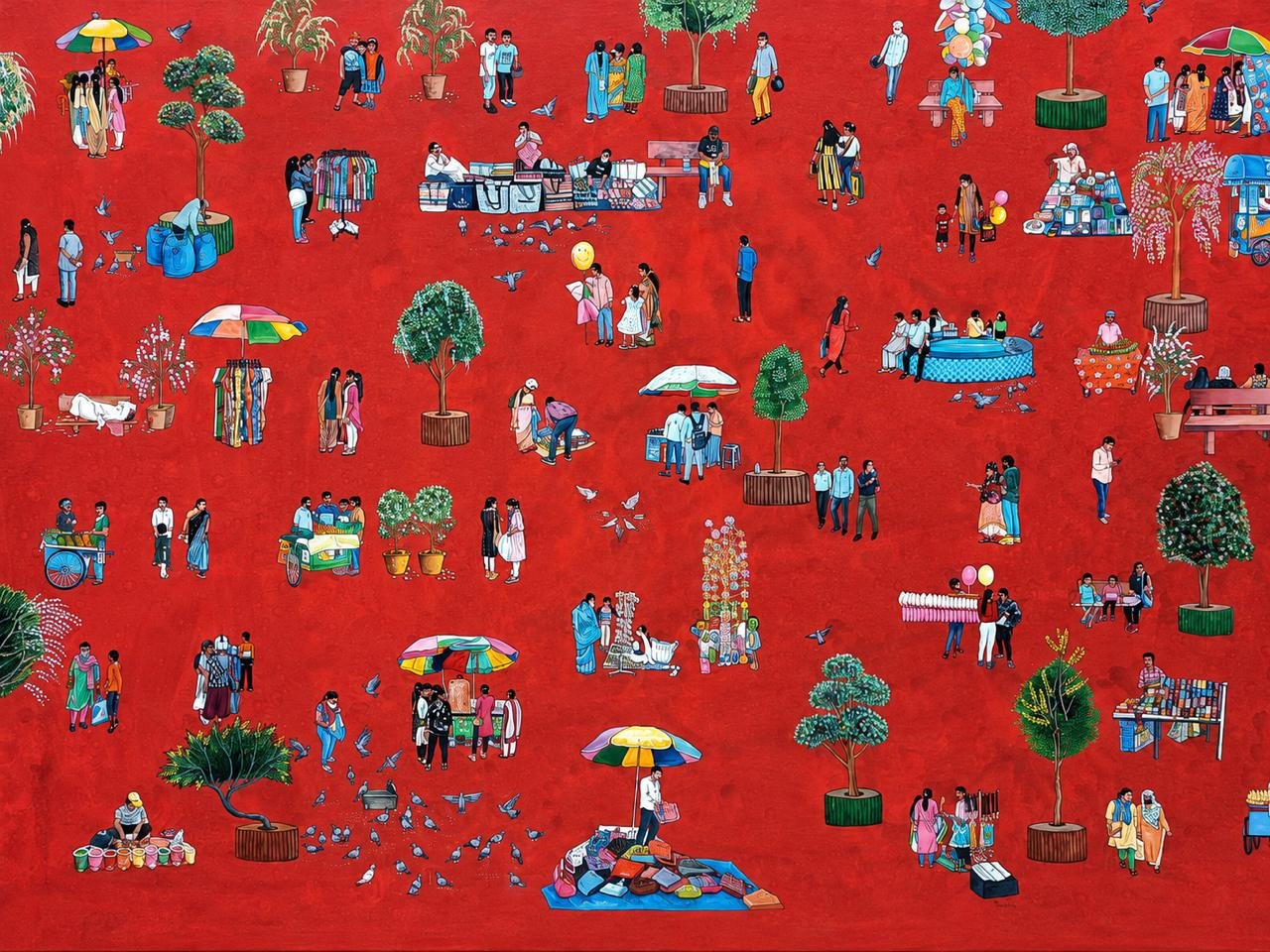
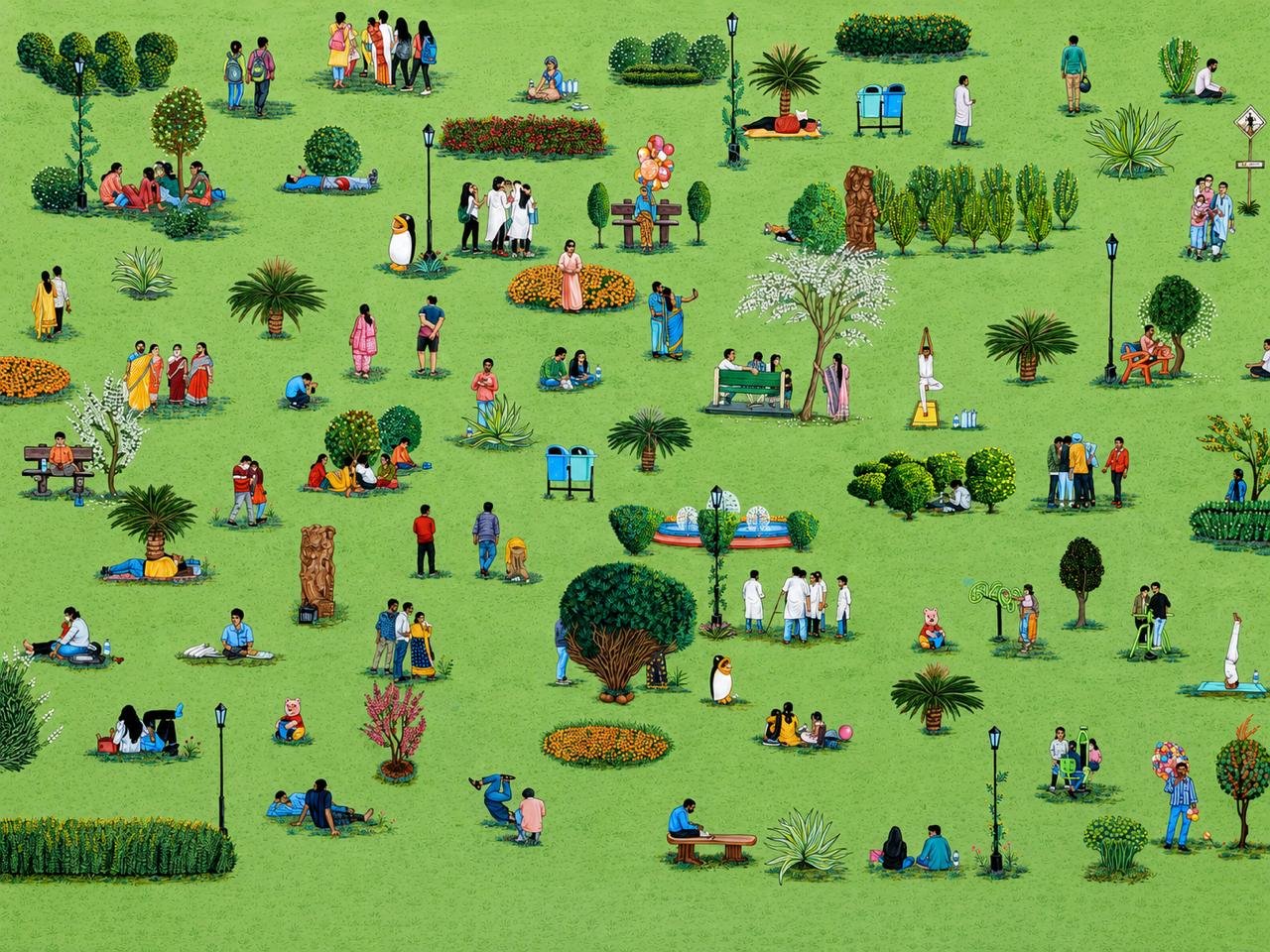
Bhubaneswar, where she is based, offers the experience of a changing urban environment. The city brings together modern development, public spaces, neighbourhood life, cultural traditions, and everyday human activity.
Her engagement with Cuttack and other public environments similarly demonstrates how a place can become part of an artistic story.
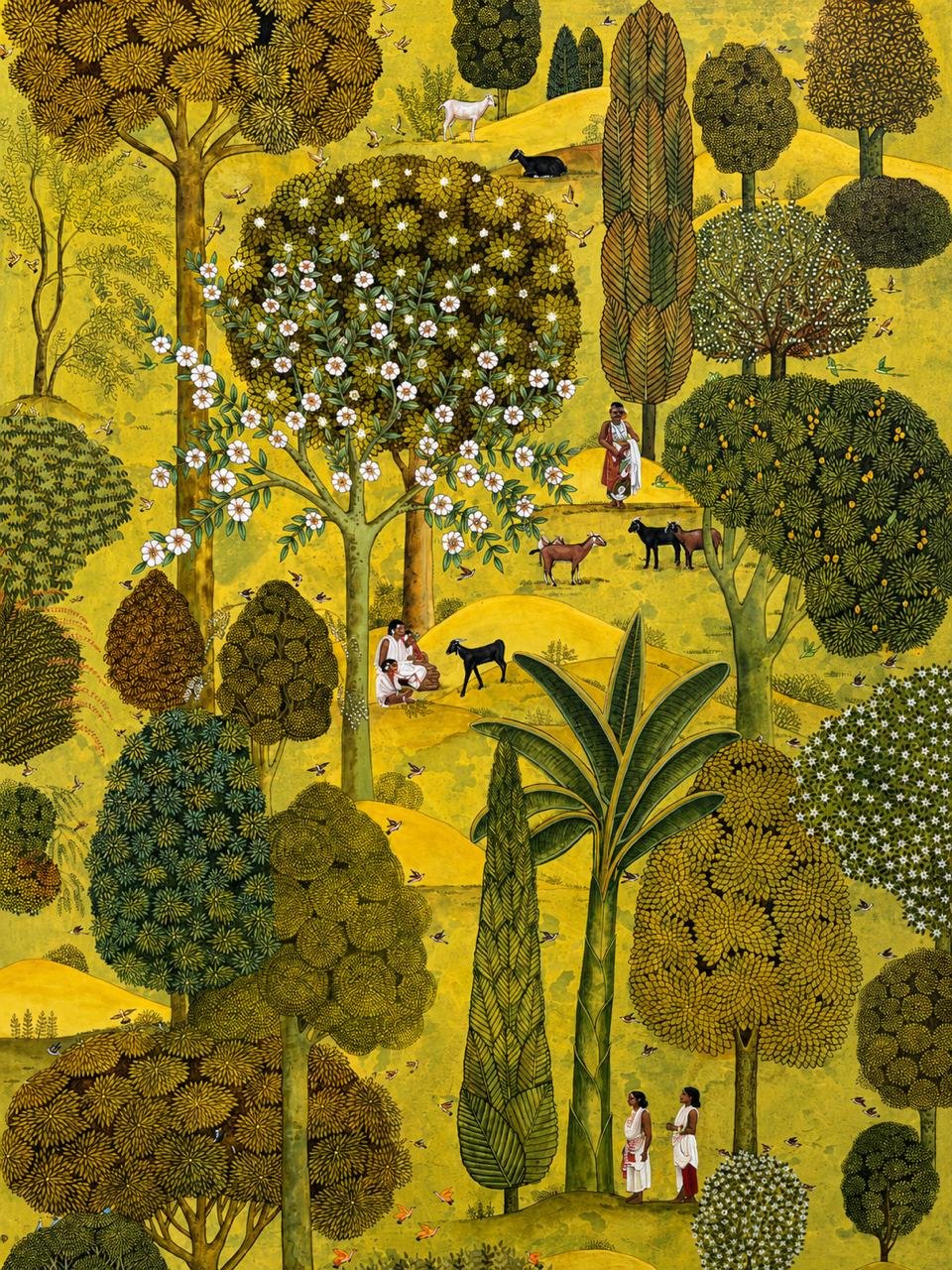
In contrast, her sustained engagement with the Niyamgiri region and the Dongaria Kondh community has brought her closer to landscapes where cultural traditions and relationships with nature remain deeply interconnected.
Moving between these environments has expanded her understanding of how place shapes human experience.
Everyday Life as Visual Storytelling
Majhi’s interest in everyday life gives her art a distinctive narrative quality. Rather than depending exclusively on dramatic or monumental subjects, she pays attention to ordinary experiences.
People going about their daily activities, changing neighbourhoods, natural surroundings, community traditions, and familiar journeys can all contain stories.
This approach is particularly visible in her engagement with children and art education. During approximately fifteen years of work with children and educational communities, she has encouraged young participants to draw from their own observations and experiences.
Household activities, animals, trees, festivals, village journeys, and personal memories can become creative subjects.
The underlying idea is simple but significant: one’s own experience can be a legitimate source of artistic knowledge.
From Observation to Interpretation
Observation plays a central role in Majhi’s practice. Her approach is not simply to see an object or environment but to understand the relationships surrounding it.
This becomes particularly important when she works with communities. Her long-term engagement with the Dongaria Kondh community has involved observing cultural practices, livelihood patterns, indigenous visual traditions, and relationships with the natural environment.
Such experiences inform her artistic vocabulary without reducing the community to a collection of visual symbols.
The artist’s role becomes that of an observer and listener who learns from a place before transforming aspects of that experience into visual form.
The Story of Niyamgiri
Niyamgiri provides one of the strongest examples of the connection between place, memory, and visual storytelling in Majhi’s work.
Her experiences there have influenced recurring visual elements, including triangular forms inspired in part by the shape of the Niyamgiri hills.
The triangle can operate on several levels. It may suggest the physical landscape, but it can also evoke ideas associated with stability, sacred geography, cultural memory, and the relationship between people and their surroundings.
This layered use of form demonstrates how a simple visual element can carry a much broader story.
“Up and Down”: Movement as Metaphor
The idea of movement becomes particularly important in Majhi’s work inspired by Niyamgiri.
Her work Up and Down draws from the daily uphill and downhill movement associated with life in the region. Such movement can be understood literally as part of everyday activities and livelihood, but it can also become a metaphor for human life.
People move in search of work, opportunity, security, resources, and changing circumstances. Movement therefore becomes both physical and emotional.
Through this idea, Majhi transforms an observed aspect of everyday life into a broader reflection on human existence.
The work demonstrates her ability to move from observation to interpretation without losing the connection to the original experience.
Materials That Remember Place
Memory also appears through material. Majhi’s use of natural pigments creates a direct connection between artwork and environment.
Materials including chalk stone, charcoal, turmeric, geru soil, and brown stone have been processed into pigments and used within her artistic practice.
These materials carry associations with the earth, local environments, traditional knowledge, and methods of colour-making. Their presence within contemporary artworks creates a relationship between physical material and cultural memory.
In this sense, the surface of the artwork can itself become a record of place.
Geometry, Pattern and Cultural Memory
Majhi’s visual storytelling does not depend entirely on recognizable figures or literal scenes. Geometry, repetition, patterns, and natural forms also contribute to the narrative.
The recurring triangle is one example. Other visual structures can help establish rhythm, movement, balance, and relationships within an artwork.
Such forms allow stories to be communicated through visual language rather than words.
This is particularly relevant to contemporary art, where meaning can emerge through the interaction of shape, material, space, memory, and cultural reference.
Public Spaces as Storytelling Platforms
Majhi’s public-art practice extends her interest in storytelling beyond conventional gallery spaces.
Large murals and public-art projects in Odisha have allowed her to work within environments where people encounter art as part of everyday life.
Projects associated with Cuttack and Bhubaneswar, as well as murals connected with sporting and cultural events, demonstrate how public art can become part of a community’s visual environment.
A public artwork can preserve memories of a place, reflect its cultural identity, or simply create a shared space for visual experience.
Works such as Pago and Thought Loom contribute to this wider public dimension of her practice.
Collective Memory and the National Stage
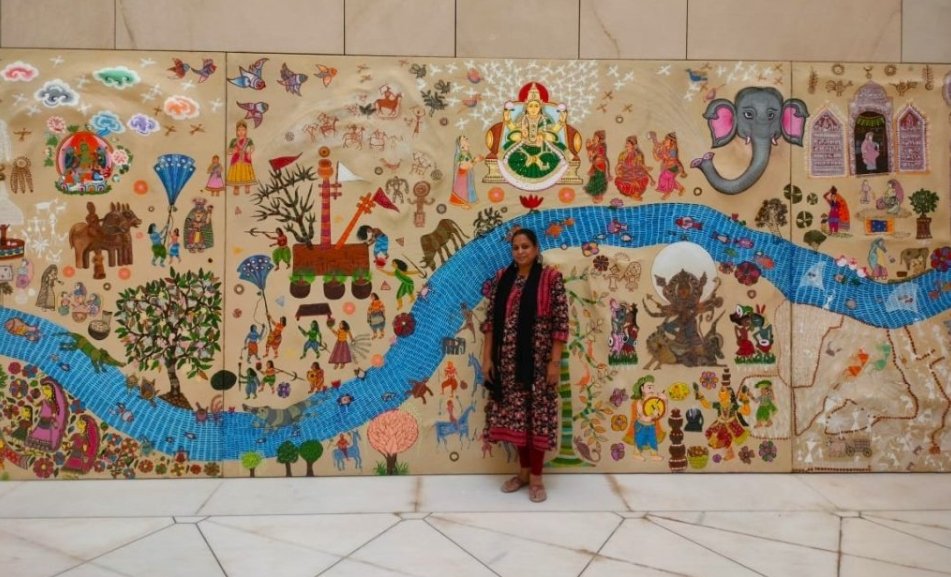
The 2023 project People’s Wall – Jan, Janani and Janmabhumi provided another important context for cultural storytelling.
Created for the New Parliament House through the Lalit Kala Akademi, New Delhi, the participatory project brought together women artists and artisans from different parts of India. Majhi served as a Co-Sutradhar and creative contributor.
The project demonstrated how regional artistic languages can participate in a national cultural setting.
Different traditions, visual practices, and forms of knowledge could be brought together to create a larger collective expression of India’s cultural diversity.
Storytelling Through Multiple Mediums
Majhi’s multidisciplinary practice gives her several ways to approach a story.
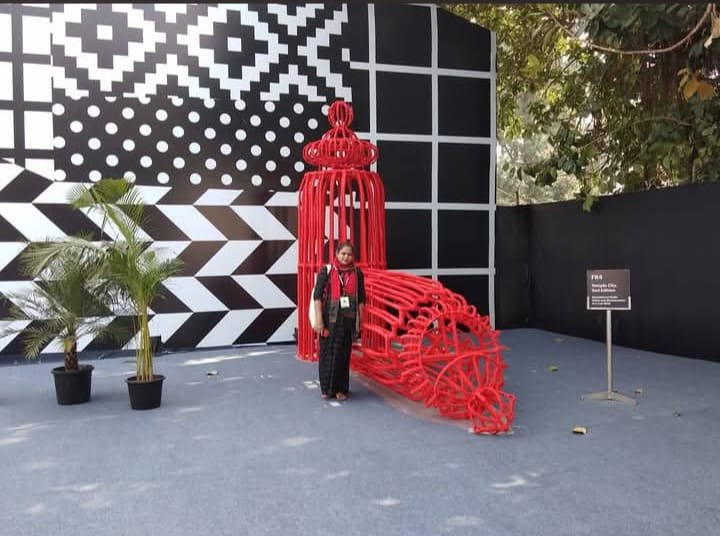
Painting can explore colour, form, memory, and observation. Sculpture can introduce physical presence and three-dimensional relationships. Installation can transform an environment. Photography can document or interpret moments and places. Public art can move artistic expression into shared spaces.
Community-based practice adds another dimension by making participation itself part of the artistic process.
Rather than treating each medium as isolated, Majhi’s practice allows the medium to respond to the context and idea.
Conclusion
Satyabhama Majhi’s art demonstrates how powerful stories can emerge from places, memories, materials, and everyday experiences. Her practice moves between urban life and rural landscapes, individual observation and collective memory, traditional knowledge and contemporary visual language.
Whether working with natural pigments, exploring the landscape of Niyamgiri, engaging with communities, encouraging children to express their own experiences, or creating art for public spaces, she repeatedly returns to the importance of looking closely and understanding context.
Her artistic language suggests that storytelling does not always require a conventional beginning, middle, and end. Sometimes a triangle can carry the memory of a mountain. A natural pigment can connect an artwork to the earth. A public wall can preserve a community’s visual identity. And an ordinary journey can become a metaphor for life.
Through these connections, Satyabhama Majhi transforms observation into visual storytelling and demonstrates the continuing power of place and memory within contemporary Indian art.